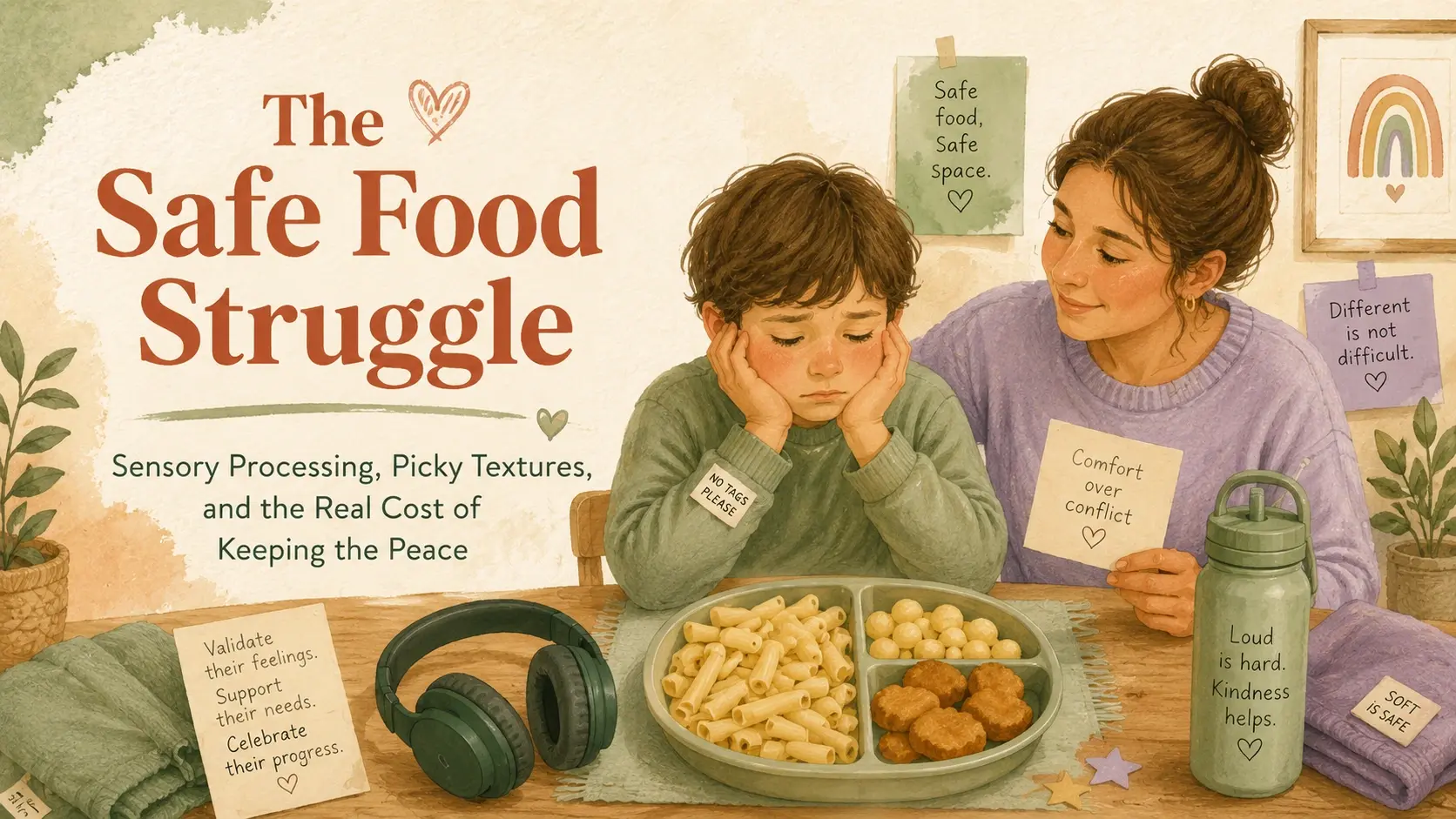
The Safe Food Struggle: Sensory Processing, Picky Textures, and the Real Cost of Keeping the Peace
Sensory Processing Disorder doesn’t always look like what people expect. It isn’t just a kid being dramatic about a tag in their shirt or refusing to eat something because they’re “being difficult.”
It’s a nervous system that registers texture, temperature, and fabric at an intensity most people never have to think about. A seam in a sock can feel like sandpaper. A shirt that fits everyone else fine can feel unbearable by nine in the morning. Food that looks and tastes completely normal to us can register as genuinely wrong to them, in a way they often can’t fully explain, only react to.
This isn’t pickiness. It’s a body telling a very real truth about what it can and cannot tolerate.
Safe Foods and Sensory Processing
Food is where this shows up hardest in our house. It is never just “picky eating.” It’s a very specific chicken nugget, from a very specific place, in a very specific shape, because the version from anywhere else registers as an entirely different food, not an acceptable substitute. It’s foods that have to be a certain temperature, a certain texture, sometimes even a certain color, and if any of that shifts even slightly, the meal is over before it started.
When Food Texture Becomes the Problem
For Carlos, it’s mushy textures specifically, a banana can be genuinely difficult for him to swallow or tolerate, not because he doesn’t like the taste, but because his body reacts to that particular texture the way someone else’s body might react to something actually inedible.
I have watched a completely reasonable dinner get rejected outright because the sauce touched the rice when it wasn’t supposed to. That is not defiance. That is a real, physical response to information that doesn’t match what their body expects.
Sensory Issues With Clothing
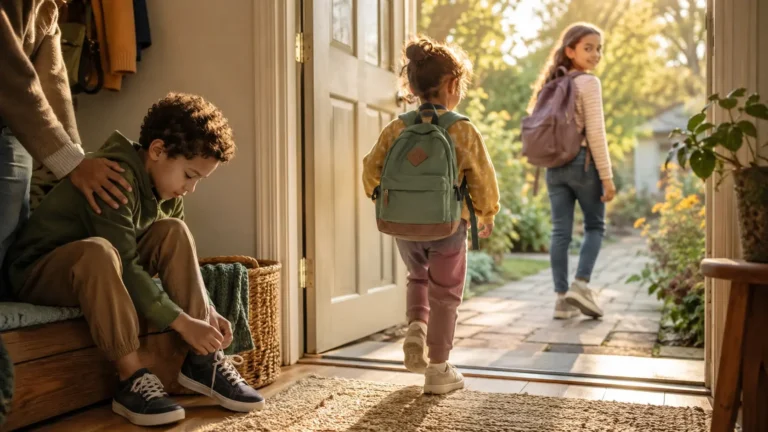
Clothes carry their own version of this fight. Certain fabrics are fine and others are instant misery. For Caydence, it’s socks and tights, the seam across the toes is a real battle before every single dance class, no matter how many times we’ve tried a different brand or turned them inside out.
Coah’s solution is to rip every tag out of everything the moment it enters the house, which means we’re often left guessing at sizes and care instructions because the evidence is long gone. Neither of them can tolerate jeans at all, the stiffness and the seams are simply too much, so that’s an entire category of clothing that’s just off the table.
We have learned, sometimes the hard way, which brands are safe and which ones are not worth the fight, because once we know, deviating from it isn’t a small ask, it’s asking our kids to spend their whole day fighting a sensation instead of living it.
Sound and Smell Sensitivities
Sound and smell carry their own version of this too. All three kids have moments where a noise most of us barely register, a blender running, a hand dryer, a fire alarm test, is enough to bring them to tears, hands over ears, needing to leave the room entirely.
For Caydence, it’s her sense of smell that turns brutal without warning. A strong perfume, a cleaning product, sometimes even a food smell in a restaurant, and it doesn’t just bother her, it makes her physically sick. I’ve pulled over on the road because an air freshener someone used before us was strong enough to make her throw up. That isn’t sensitivity for effect. That’s sensory input crossing a real threshold, and her body responding the only way it knows how.
The Real Cost of Sensory Safe Foods and Clothing
Here is the part nobody warns you about until you’re living it: this gets expensive. Once you find the one snack, the one shirt, the one brand that actually works, you don’t buy one of it, you buy every single one the store has, because if they discontinue it or you run out at the wrong moment, all hell breaks loose. I have bought twenty bags of the same snack in one trip because that particular bag was the only thing guaranteeing a peaceful afternoon.
I have driven to multiple stores hunting down a specific brand of shirt because the one my child could actually tolerate got sold out everywhere near us. Trial and error costs money too, the shirts that get worn once and rejected forever, the snacks that get one bite and go straight in the trash. None of that is wasteful spending. It’s the real cost of keeping a household regulated.
And there’s an emotional cost that runs alongside the financial one. Explaining, again, to a relative or a stranger in line at the grocery store why your child only eats a handful of foods, or why they’re wearing the same three shirts on rotation, gets exhausting.
People assume it’s a choice, or a parenting failure, or something we could fix if we just tried a little harder. It isn’t any of those things. It’s a body doing exactly what its wiring tells it to do, and our job isn’t to force it into submission, it’s to work with it.
So we stock the pantry deep, we keep a rotation of safe clothes on hand, and we stop apologizing for it. If you’re in the thick of this too, buying in bulk, hunting down a discontinued snack, memorizing which brand of socks won’t start a war, you are not overreacting and you are not alone. You are doing exactly what your child’s body actually needs, even when the receipt tells a very specific story.
Raising Different Together ❤️
What’s your family’s “safe food” or “safe shirt” that you’ve had to buy in bulk to survive? Comment ❤️ below, we’d love to hear what’s keeping the peace at your house too.
Have a story of your own? ❤
Every family’s journey looks different, whether you’re a parent, grandparent, aunt, uncle, or caregiver walking alongside a child with special needs. If you’d like to share your story with our community, we’d be honored to feature it. Reach out at hello@raisingdifferenttogether.com.
And if you’re in the thick of it right now, here’s how we help families like yours.
You’re not doing this alone.