How to Write an Effective Email to Your Child’s School District
Once you’ve submitted your written request for an evaluation, you’re going to be writing a lot of emails. This is just the truth of special education advocacy: email becomes your primary language with the district, and how you write those emails matters almost as much as what you’re asking for. I learned this slowly, through trial and error, through emails that got ignored and emails that got immediate responses, through tone that worked and tone that backfired. There’s a specific way to communicate with a school district that keeps you firm, keeps you documented, and keeps the process moving without burning bridges you might need later. Let’s talk about how to actually do that.
Put Important School Communication in Writing
The first rule is this: everything goes in writing, and nothing important happens over the phone alone. If you have a phone conversation with your child’s teacher, case manager, or anyone at the district, follow it up with an email summarizing what was discussed. Something as simple as, “Thank you for speaking with me today. To confirm what we discussed, you mentioned X and agreed to Y by Z date.” This isn’t about being distrustful. It’s about creating a paper trail that protects both you and your child, because verbal agreements have a way of getting lost, forgotten, or reinterpreted months later when it matters most. If it’s not in writing, it becomes much harder to rely on later. For advocacy purposes, document it.
How to Write an Effective Email to the School District
Tone matters more than people expect. You want to be clear, direct, and unemotional in your writing, even when what you’re feeling is anything but calm. I know the frustration that builds when you feel like you’re not being heard, when requests go unanswered, when your child is struggling and the system feels slow and indifferent. But an email written in anger, however justified that anger might be, gives the district an easy way to dismiss you as “difficult” instead of engaging with your actual concerns. Stick to facts. State what you’re requesting. Reference specific dates, specific conversations, specific policies or laws when relevant. Close with a clear ask: what you need from them and by when. Firm and factual will get you further than emotional, even on the days when emotional is exactly how you feel.
Who Should You CC on a School District Email?
Always know who to CC. This is a strategy piece that took me time to learn: when you’re emailing about something significant, like a formal request, a concern about services not being provided, or a timeline that’s being missed, consider who else needs to be looped in. This might include your child’s case manager, the school psychologist, the assistant principal, or the district’s CSE chairperson, depending on what you’re addressing. CCing the right people creates accountability. It signals that you understand the structure of who’s responsible for what, and it ensures your concern doesn’t get lost in one person’s inbox. This same group of people, by the way, is often exactly who you’ll see sitting across from you at the IEP meeting table, so knowing their roles now gives you a head start later. You’re not trying to go over anyone’s head unnecessarily. You’re making sure the people who need to know, know.
Save Your School Emails and Build a Paper Trail
Keep every email. Not just the ones you send, but the ones you receive. Create a folder in your email specifically for your child’s school correspondence, organized by school year if you can manage it. This becomes an extension of your advocacy binder, which we’ll talk about next, and it means that when you need to reference a specific promise, a specific timeline, or a specific response from months ago, you can find it in seconds instead of scrambling through your entire inbox in a panic during a meeting. This is especially critical if you ever find yourself in a CSE meeting where a past commitment or timeline is being disputed, having the exact email in hand settles the question immediately. Documentation is only as useful as your ability to access it quickly when you need it most.
School District Email Checklist
Here’s a quick recap before we move forward:
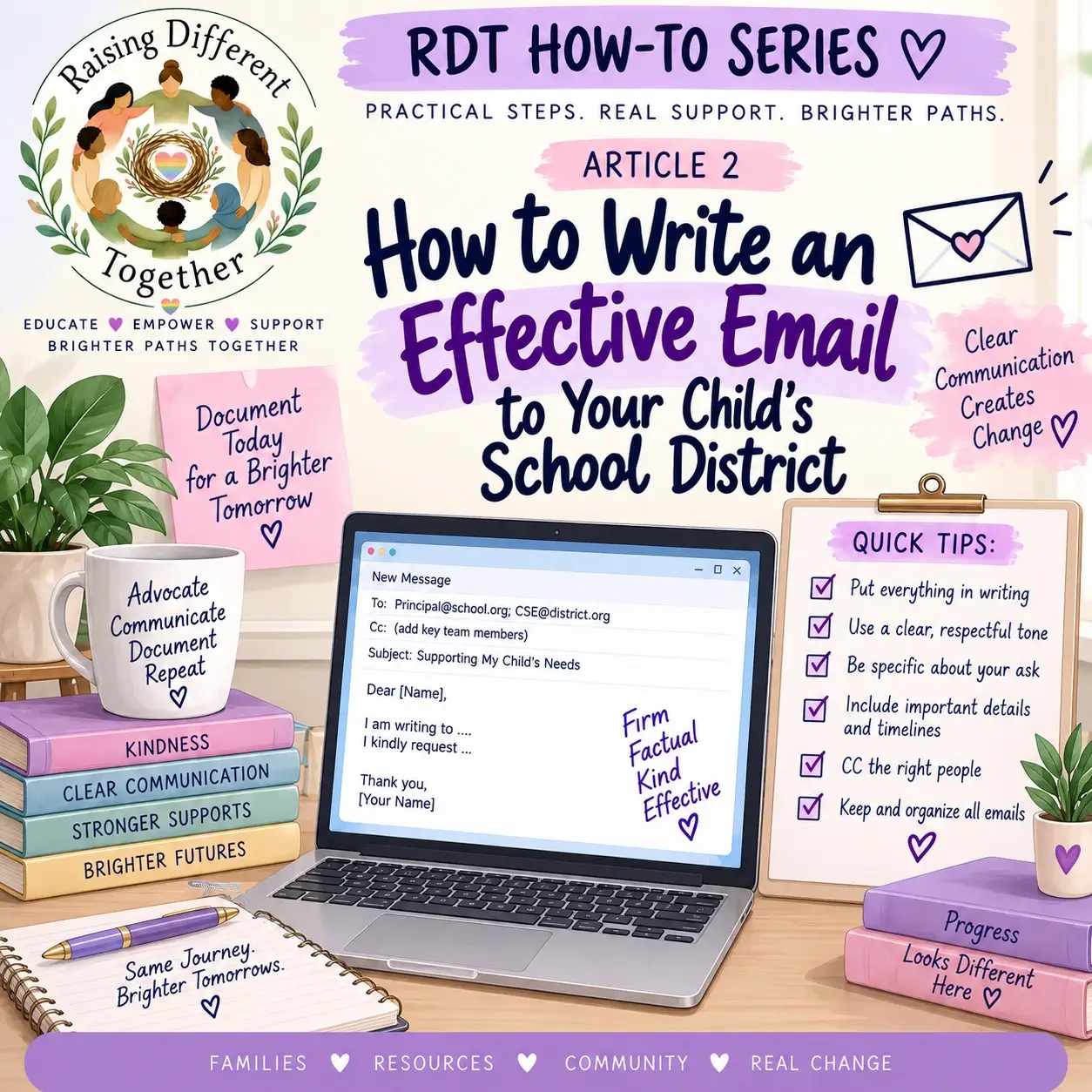
- Put everything in writing, even summaries of phone calls or in-person conversations.
- Keep your tone clear, direct, and factual, even when you’re feeling anything but calm.
- End every email with a specific, clear ask: what you need and by when.
- CC the right people so accountability doesn’t disappear into one inbox.
- Save every email you send and receive in an organized, easily searchable folder.
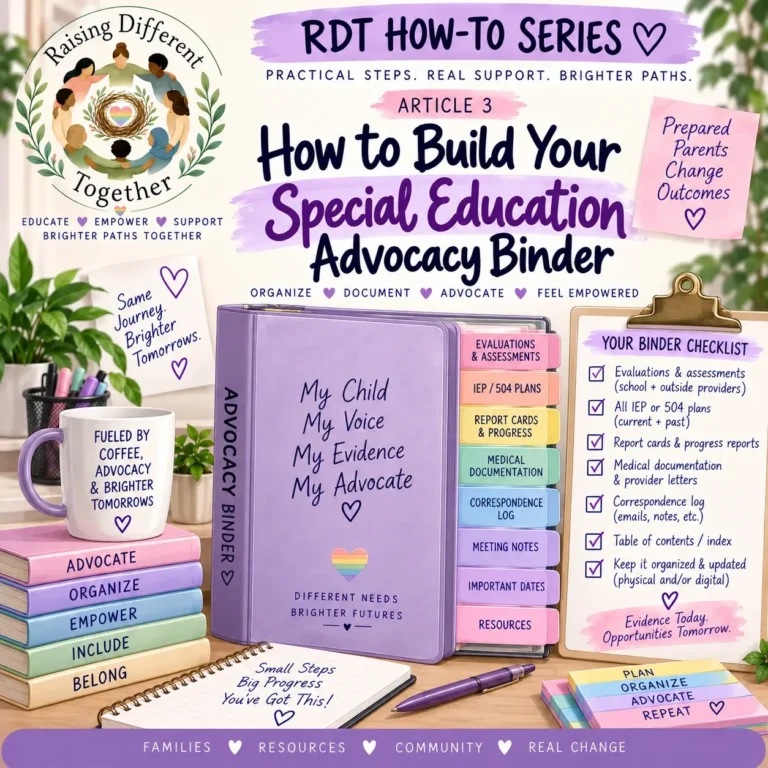
Once you’ve built this habit of clear, documented communication, you’re going to have a growing collection of emails, evaluations, IEP drafts, and notes. That’s exactly why the next step in this process is building your advocacy binder, the single tool that will keep all of this organized and ready to use whenever you need it. We’ll walk through exactly how to build one next.
The Conversation Continues
If you’re staring at a blank email trying to figure out how to say what you need to say, sometimes the hardest part isn’t knowing that you need to put something in writing. It’s figuring out what matters enough to include and what you’re actually asking the school to do. That’s something we can help you work through.
Send us an email or book a free 20-minute phone call, and we’ll help you craft the communication your child’s situation actually needs. Reach us at hello@raisingdifferenttogether.com.
Your words matter in this process. Let’s make sure they land the way they’re supposed to.
You don’t have to do this alone.
Feeling buried in paperwork? We help parents organize the record, understand what’s actually in front of them, and prepare for the next conversation, so you walk in focused instead of overwhelmed.
You’re not doing this alone.